


By Zhang Liangfu, visiting research fellow at National Institute for South China Sea Studies, adjunct researcher from the Collaborative Innovation Center of South China Sea Studies
The Huangyan Island is an inalienable part of China's territory.
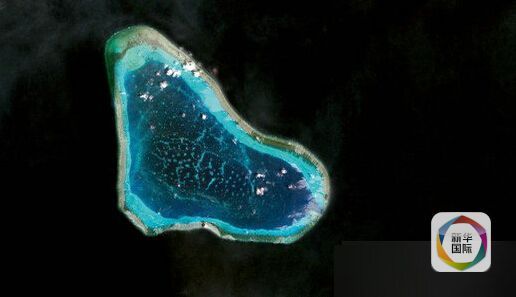
China is the first country to name Huangyan Island, and to adopt its sovereignty
Historical records have proven that China discovered Huangyan Island in the Yuan Dynasty (1279-1368). During the Ming and Qing dynasties (1368-1911), the entire South China Sea Islands including Huangyan Island were recognized as Chinese territory.
In 1935, the Chinese government had established the Committee of Land and Water Map Review, declaring Chinese and English names for all South China Sea Islands. Huangyan Island was named Scarborough Reef and included in China's territory, as a part of Dongsha Islands.
In Oct. 1947, the region division of the state's Ministry of the Interior approved old and new names for South China Sea islands. Scarborough Reef was re-named Democratic Reef.
In official maps published by Governments in Chinese successive dynasties, Huangyan Island was marked as Chinese territory.
On Sept. 4, 1947, the Chinese Ministry of Interior designated Dongsha, Zhgonsha, Xisha, Nansha Islands under Guangdong Province jurisdiction. In Dec. 1947, China's Ministry of Interior published a map of South China Sea Islands.
On April 1, 1949, the Chinese government set up a Hainan Special Administrative Region, the jurisdiction of South China Sea islands had shifted to the Hainan Special Administrative Region.
In 1959, Hainan Administrative Region, Guangdong Province set up an office for Xisha, Nansha, Zhognsha Islands in Yongxing Island, Xisha islands; unifying jurisdiction of the islands.
After establishment of Hainan province in 1988, the office of Xisha, Nansha, Zhognsha Islands had set up a dispatched institution to assume jurisdiction powers. In 2012, Beijing established Sansha City as a prefecture-level City to strengthen territorial sovereignty over Huangyan Island and tap its resources.
China has taken over long-term development of Huangyan Island
Huangyan Island waters are traditional fisheries for the Chinese. Since ancient times, our fishing boats have taken fishery production activities in Huangyan Island waters. Beijing has mobilized numerous scientific expeditions to the island.
In 1977, researchers from the South China Sea Research Institute of the Chinese Academy of Sciences arrived at Huangyan Island to conduct research. A second landing for research had occurred in 1978.
In 1994, 1995 and 1997, Chinese officials had approved Chinese Radio Sports Association and International Radio Amateurs to land on the island to carry out activities.
Manila has no right to claim territorial sovereignty over Huangyan Island
Legal and official documents of the Philippines and relevant international treaties have shown that Huangyan Island is not Philippines territory. The scope of Philippines territory is determined by international treaties, none of which relates to Huangyan Island.
The Treaty of Paris (1898), American-Spain Treaty of Washington (1900), and Anglo-American Treaty (1930) (referred to as the Three Treaties) had clearly defined the territorial limits of western boundaries of the Philippines as 118 degrees east Longitude.
The 1935 Philippine Constitution, 1947 general treat on US-Philippine relations, 1952 Philippine-US military alliance treaty, Philippine Republic Act No. 3046 on June 17, 1961, Amendment Act to Baselines of the Territorial Sea of the Philippine in 1968 have reaffirmed the legality of the Three Treaties, and recognizing the Philippine territory, which did not include Huangyan island.
The Philippines' map published in 1981 and 1984 also plotted the Huangyan Island outside the Philippines boundary.
Manila has never raised objections against Beijing's jurisdiction on sovereignty and exploitation on Huangyan Island before 1997, and had repeatedly declared Huangyan Island is outside Philippine territory.
On Feb. 5, 1990, Bianfuni, Philippine Ambassador to Germany, wrote a letter to Dieter, a German radio enthusiast, made it clear that according to the Philippine ministry of national map and resource information, Huangyan Island is excluded from Philippines territorial sovereignty.
According to documents issued by the Philippine ministry of national map and resource information on October 18, 1994, and documents to the American Amateur Radio Association issued by Philippine Amateur Radio Association, they confirmed the Philippine territorial borders and sovereignty was regulated by the term 3 of the Treaty of Paris (1898).
Yet in recent years, Manila has claimed its territorial sovereignty over Huangyan Island by claiming geographic proximity. Nevertheless, international law had indicated that geographical proximity is not the rule to resolve territorial attribution.
Manila argued its jurisdiction over Huangyan Island due to the land's geographical location within its exclusive economic zone, but there is no legal basis as mentioned in any international laws including the United Nations Convention on the Law of the Sea.
Under international law, lands rule oceans. Territorial sovereignty is the base of marine jurisdiction. Maritime jurisdiction can be derived from territorial sovereignty. Such derived rights could not compete with territorial sovereignty.
The basic principle of modern law of the sea guides the 1982 United Nations Convention on the Law of the Sea. The UNCLOS allows coastal States to establish 200- nautical mile exclusive economic zone, but coastal States have no right to damage inherent territorial sovereignty of other countries.
The attempt to change the practices of territorial sovereignty formed historically with UNCLOS stands contrary to international law. Principles against UNCLOS could not be achieved.
Beijing has territorial sovereignty over Huangyan Island, and enjoys maritime rights and interests according to UNCLOS. Manila's Maritime jurisdiction scope should not damage Beijing's territorial sovereignty over Huangyan Island and its relevant maritime rights and interests.
Manila cannot claim its maritime jurisdiction by annexing Chinese territory Huangyan Island. Beijing holds indisputable territorial sovereignty over Huangyan Island. Manila should recognize and respect Beijing's territorial sovereignty over Huangyan Island.
( The opinions expressed here do not necessarily reflect the opinions of Panview or CCTV.com. )

Panview offers an alternative angle on China and the rest of the world through the analyses and opinions of experts. We also welcome outside submissions, so feel free to send in your own editorials to "globalopinion@vip.cntv.cn" for consideration.